
For many aspiring landed homeowners, the biggest challenge today is not whether they want to enter the market.
It is knowing which home to choose — and whether the price paid will still feel justified years later.
Unlike condominiums or HDB flats, landed homes are highly individual assets. No two properties are exactly alike. Even houses along the same street can differ significantly in long term appeal, functionality, and future demand.
This lack of standardisation is precisely what makes the landed market attractive, but it is also what makes decision making far more complex.
Many buyers find themselves viewing multiple homes, analysing countless listings, and yet feeling no closer to certainty. The hesitation is rarely about affordability alone. More often, it stems from a deeper concern:
How do you know when you have truly found the right landed home?
The Landed Market Is Less Transparent Than Most Buyers Expect
One of the first realities buyers encounter is that landed housing does not behave like a typical residential market.
In the non landed segment, units within the same development tend to follow predictable pricing patterns. Layouts are comparable, facilities are shared, and valuation benchmarks are clearer.
Landed homes operate differently.
Value is influenced by factors that are often invisible at first glance:
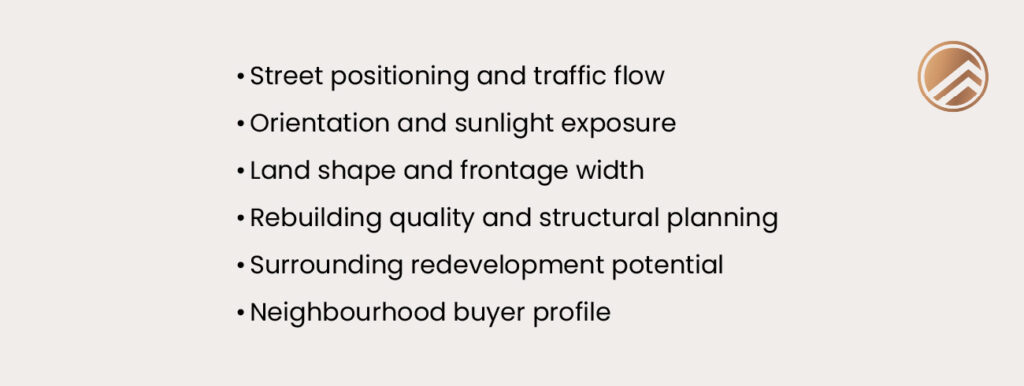
Because of these micro differences, price alone rarely tells the full story.
Two houses with similar land sizes and asking prices may represent entirely different long term outcomes.
Without a clear framework for evaluation, buyers naturally feel uncertain about committing.
Why Finding The Right Unit Has Become Harder

Several structural shifts have made landed home selection more challenging in recent years.
Greater Diversity In Housing Condition
Over the past decade, many landed properties have undergone rebuilding or major Additions and Alterations. While this has raised overall housing quality, it has also widened the gap between homes.
A newly rebuilt property may appear comparable to another modern home nearby, yet differences in layout planning, construction standards, and practical usability can be substantial.
These distinctions are not always obvious during initial viewings.
As a result, buyers often struggle to determine whether they are paying for genuine quality or simply aesthetic upgrades.
Asking Prices Do Not Always Reflect Market Reality
Unlike standardised housing segments, landed property pricing frequently reflects owner expectations rather than transaction fundamentals.
Some prices are influenced by previous peak market transactions. Others attempt to recover renovation expenditure or reflect emotional attachment to a long held family home.
This creates a landscape where buyers must interpret pricing carefully.
The real challenge becomes less about whether a property is affordable and more about whether it represents defensible value.
Higher Stakes Lead To Greater Hesitation
Purchasing a landed home typically represents a major life stage decision.
It affects lifestyle, family planning, commuting patterns, and long term financial positioning. Because the commitment is significant, buyers naturally seek a higher level of certainty before proceeding.
Ironically, the desire to make the perfect decision often leads to prolonged indecision.
A Practical Framework For Evaluating Landed Homes
Experienced landed buyers tend to rely on structured filters rather than searching endlessly for a flawless property.
Micro Location Matters More Than District Labels
District reputation alone rarely determines future desirability.
Within any district, subtle differences between streets can influence both daily liveability and long term demand. Internal roads, accessibility to transport nodes, surrounding housing density, and neighbourhood character often matter more than postal code prestige.
A well positioned street within a quieter enclave can outperform a less ideal pocket within a traditionally popular district.
Prioritise Land Efficiency Over Built Up Size
Many buyers instinctively focus on interior size. However, landed property value is fundamentally anchored by land.
Important considerations include:

A slightly smaller but well configured plot may offer stronger long term resilience than a larger yet inefficient one.
Understand The Condition Spectrum
Most landed homes fall into three broad categories:

Each option serves different buyer priorities.
Rebuilt homes provide convenience and immediate usability but typically command a premium. Older homes offer customisation potential but require time, energy, and construction management.
The optimal choice depends less on market timing and more on lifestyle readiness.
Study Transactions Instead Of Listings
A common mistake is benchmarking value against other listings.
Listings represent seller expectations. Transactions reflect market acceptance.
Analysing recent transaction ranges within the same micro enclave helps buyers understand realistic pricing boundaries and reduces uncertainty during negotiations.
When buyers anchor decisions to proven transaction behaviour, concerns about overpaying become significantly easier to manage.
Assess Liquidity Through Buyer Appeal
Liquidity in landed property is not uniform across all homes.
Properties that tend to attract broader buyer interest typically share several traits:

Choosing a home with enduring buyer appeal strengthens long term exit options regardless of broader market cycles.
Why Buyers Sometimes Overpay
Overpaying rarely occurs because buyers lack discipline. More often, it arises from emotional decision making.
The Renovation Effect
A beautifully renovated home can create immediate emotional connection. Buyers often assign higher value to convenience and move in readiness than they initially intend.
However, renovation value naturally depreciates over time, while land value remains the core driver of resilience.
Separating lifestyle preference from structural value helps buyers make clearer decisions.
Perceived Scarcity
Singapore’s landed housing supply is inherently limited. When a desirable property becomes available, urgency can build quickly.
Yet scarcity alone does not guarantee value.
The more important consideration is whether the property holds strong positioning within its immediate micro market rather than simply being rare.
Anchoring To Historical Peaks
Past record transactions can influence expectations on both the buyer and seller side.
But markets evolve. Conditions change. Financing environments shift.
Grounding decisions in current transaction ranges rather than historical highs provides a more reliable reference point.
The Cost Of Waiting For Perfection
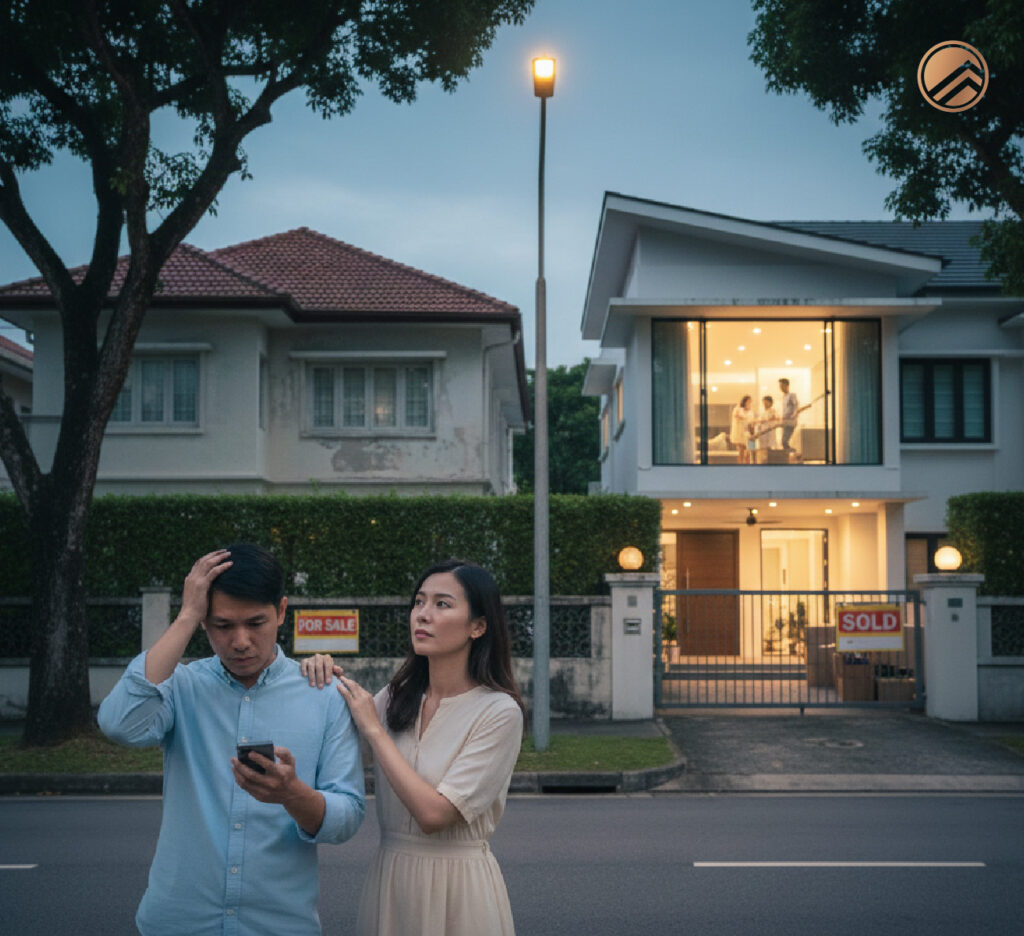
Many buyers believe waiting longer will eventually produce an ideal opportunity.
While patience is valuable, landed housing does not supply options in a continuous flow. Suitable homes tend to appear in cycles.
Opportunities within specific enclaves or price bands may emerge only occasionally.
Waiting indefinitely for a perfect combination of price, condition, and location may result in repeated missed opportunities, particularly in areas where supply turnover is naturally low.
At the same time, urgency alone should never drive decision making.
The most effective approach is preparation — understanding clearly what constitutes a suitable property before the right opportunity appears.
Rethinking Price In The Landed Market
Price often dominates early conversations about landed property, but long term satisfaction is rarely determined by entry price alone.
Homeowners tend to evaluate success differently over time:
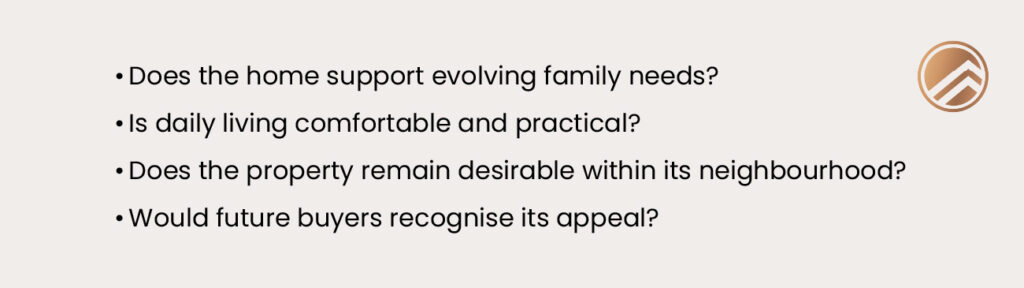
When these fundamentals are present, short term price movements tend to matter less.
Conversely, choosing a property primarily because it appears cheaper can lead to compromises that become more apparent with time.
In landed housing, value is less about securing the lowest price and more about acquiring the right property at a rational price level.
Clarity Matters More Than Timing
The landed market rewards informed decisions rather than perfect market timing.
Buyers who focus on structural fundamentals — micro location, land efficiency, realistic valuation, and long term liveability — place themselves in a stronger position to act confidently when suitable opportunities arise.
Finding the right landed home may never feel straightforward.
But with a clear evaluation framework, uncertainty becomes manageable, decisions become more grounded, and confidence naturally follows.
And ultimately, clarity — more than market conditions — is often what allows buyers to move forward.
If you are considering your next move within the landed segment, speak with our sales consultants to discuss how these market dynamics may apply to your specific home or buying goals.
Thank you for reading, and stay tuned! For more detailed insights regarding the landed property market, join our Landed VIP Club and stay updated with the latest market trends and expert advice.