

Most landed buyers don’t lose money because the market turns against them.
They lose because of how they entered the deal in the first place.
In today’s landed market, two concerns consistently surface. The first is overpaying. The second, and more pressing one, is the fear of being unable to exit later. At first glance, they seem like separate risks. In reality, they are closely linked, and more often than not, one leads directly to the other.
If you understand how these two fears are connected, you start to see that the solution to both lies in how you buy, not how you sell.
Why Being Unable to Exit Is the Real Concern
Between the two, the fear of being unable to exit deserves more attention.
Because unlike overpaying, which is debated at the point of purchase, exit risk only becomes real when you try to sell. And by then, most of the important decisions have already been made.
Landed homes are not highly liquid assets. The buyer pool is smaller and more selective, shaped by factors such as budget, family structure, and long term plans. Even in a stable or rising market, not every property moves easily.
When owners say they are unable to exit, it rarely means there are no buyers at all. More often, it means the property sits on the market longer than expected, attracts limited interest, or only receives offers that fall short of expectations. The issue is not whether it can be sold, but whether it can be sold on acceptable terms.
This is where many buyers get it wrong. Exit is not something you solve later. It is something you decide upfront, at the point of entry.
Why Overpaying Is More Subtle Than It Seems
Overpaying is often misunderstood.
Many buyers think overpaying simply means buying above recent transaction prices. But in landed homes, that is not necessarily the case. A buyer can pay within a reasonable range of past transactions and still overpay.
Because the real question is not what the last buyer paid. It is what the next buyer is willing to pay.
And that is where things become less obvious.
One of the most common traps is paying for condition rather than land value. A well renovated home can be extremely appealing, especially for buyers who want a move in ready option. But over time, renovation loses its value. Land does not. When the next buyer comes in, they may not see the same premium in the finishes. In some cases, they may even factor in the cost of redoing the space entirely.
There is also the emotional aspect of buying landed homes. Unlike apartments, landed properties tend to feel more personal. The layout, the façade, the sense of space all contribute to the decision. But the more a purchase is driven by personal preference, the higher the chance it becomes a niche product when it comes time to sell.
Another layer that is often overlooked is redevelopment potential. Two houses may appear similar, but differences in zoning, plot ratio, frontage or land shape can lead to very different outcomes over time. Missing these details can result in paying a price that is not supported by the land’s true potential.
The key issue is this. You rarely feel like you have overpaid when you buy. You realise it when you try to sell.
How Overpaying Leads Directly to Exit Problems
This is where both fears come together.
When you overpay, you are not just paying more in the present. You are positioning yourself ahead of where the next buyer is comfortable entering. And that has a direct impact on your ability to exit.
A property that was bought at a premium for its renovation may struggle to attract buyers who are more focused on land value. A house with a unique or highly customised layout may appeal strongly to one buyer, but fail to resonate with the broader market. Even properties that sit at the upper edge of their micro market can face resistance when newer or better positioned alternatives come in.
In each of these cases, the issue is not just price. It is alignment with market expectations.
And this leads to a simple but important principle. The next buyer determines your exit, not your purchase logic.
Seeing Landed Property the Way a Valuer Does
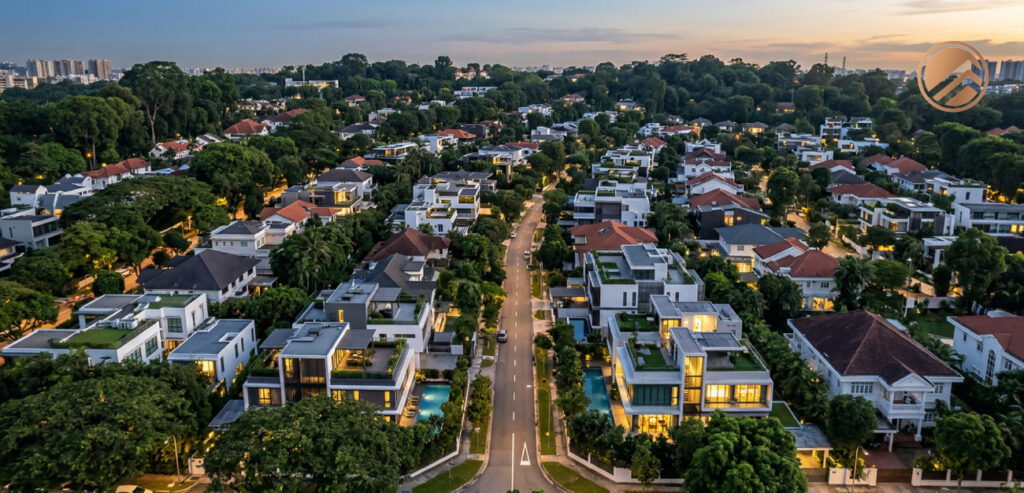
If you want to avoid both overpaying and exit risk, you need to step away from how a buyer typically views a home, and start looking at it the way a valuer would.
This means placing land value at the centre of your assessment. Instead of focusing on finishes or how move in ready the property is, the starting point should always be recent transactions within the same immediate area. Land price per square foot, adjusted for tenure and location, forms the base of any sound valuation.
From there, deeper adjustments come into play. Factors such as zoning controls, plot ratio, frontage and land shape all influence how the property can be used or redeveloped in the future. These are structural elements that cannot be easily changed, and they have a lasting impact on value.
The built up portion of the home, while important, should be viewed differently. Houses age. Renovations date. Over time, most landed properties go through cycles of addition and alteration, or even complete rebuilding. Treating built up value as permanent often leads to misjudging the true worth of a property.
When you shift your perspective this way, you start to see why some properties hold their value better than others, even within the same street.
Avoiding Exit Problems Starts With Liquidity Awareness
One of the most practical ways to reduce exit risk is to think in terms of liquidity before you even make a purchase.
Not all price ranges within the landed market behave the same way. Some segments see consistent activity, while others are far more selective. Buying within an active price band increases your chances of attracting future buyers. Moving too far outside of it, even if the property seems appealing, can significantly narrow your exit options.
Location plays a role as well. Established enclaves with regular transaction activity provide clearer benchmarks and a more predictable buyer pool. In contrast, properties in ultra niche or rarely transacted streets may look attractive on paper, but can become harder to price and sell later.
Layout also matters more than many realise. While unique designs can be visually impressive, practicality tends to have broader appeal. Homes that accommodate multi generational living, with features such as ground floor rooms and ensuite bedrooms, tend to resonate with a wider audience. In contrast, highly customised layouts often reflect a specific lifestyle that may not translate well to future buyers.
The Often Overlooked Factor: Future Capital Expenditure
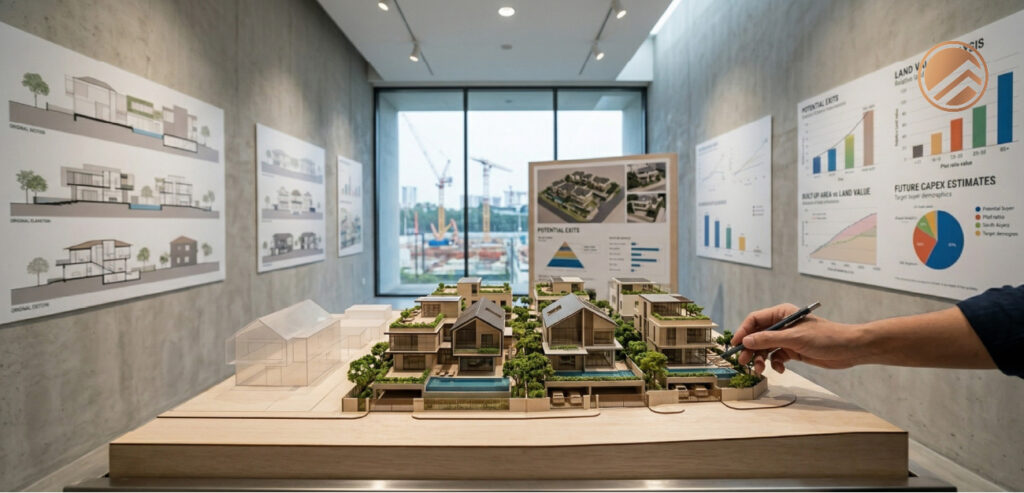
Another layer that ties both fears together is the issue of future capital expenditure.
Many buyers focus heavily on the current condition of the home, but underestimate what it will take to maintain or upgrade the property over time. Renovations, additions, and eventual rebuilding are not just possibilities. They are part of the natural lifecycle of landed homes.
This becomes especially relevant when considering resale. A buyer who is aware that significant works are needed will factor those costs into their offer. If the property was originally purchased at a premium because of its condition, this creates a mismatch that makes exit more challenging.
Understanding where a property sits in its lifecycle helps to bridge this gap. It allows you to make a more informed decision about how much of the price is truly supported by land value, and how much is tied to elements that will not hold over time.
Buying With Exit in Mind
The goal when purchasing a landed home is not simply to secure something that works for you today. It is to ensure that the property remains relevant to the next buyer as well.
This often means resisting the temptation to go for what feels perfect. Homes that are slightly imperfect on the surface, but strong in their fundamentals, tend to offer better long term positioning. Cosmetic issues can be addressed over time. Structural limitations, on the other hand, are far harder to fix.
It also helps to think beyond your own ownership. A useful way to frame the decision is to consider not just your own exit, but the exit of the next buyer after you. Properties that maintain flexibility, whether through layout adaptability or redevelopment potential, tend to perform more consistently across different market conditions.
How These Decisions Play Out in Reality
We often see buyers who pay a premium for a beautifully renovated home, only to find that years later, the market no longer values those finishes in the same way. The next buyer comes in with a different set of expectations, often factoring in renovation costs rather than appreciating the existing condition.
On the other hand, buyers who focus on securing strong land value, even if the house itself is older, tend to benefit from a broader pool of potential buyers. Their property appeals not just to those who want to move in, but also to those considering rebuilding or reconfiguring the space.
There are also cases where highly unique homes struggle to find alignment with the market. What worked perfectly for one owner becomes a limiting factor for the next.
A Simple Shift in Mindset
At its core, this all comes down to how you frame your decision.
Most buyers start with the question, “Do I like this house?” But in landed ownership, that question alone is not enough.
A more useful question is, “Will the next buyer want this?”
This shift may seem subtle, but it changes everything. It moves the focus from personal preference to market alignment, from present satisfaction to long term positioning.
Interestingly, the best landed purchases often do not feel perfect at the start. They require a bit more thought, a bit more planning. But they tend to feel far more comfortable when it comes time to exit.
Conclusion
Overpaying and being unable to exit are not separate risks. They are two outcomes of the same decision making process.
When buyers focus too heavily on condition, design or personal preference, they increase the likelihood of both. But when the decision is anchored in land value, market positioning and future buyer behaviour, these risks become far more manageable.
Because in landed ownership, the most important question is not whether the property feels right today.
It is whether it will still make sense to the next buyer when the time comes.
If you would like a second opinion on whether a property holds up from both a land value and exit perspective, our team is always available to assist.
Thank you for reading, and stay tuned! For more detailed insights regarding the landed property market, join our Landed VIP Club and stay updated with the latest market trends and expert advice.