

If there is one price band that consistently captures the attention of serious landed home buyers today, it is the $4M to $6M range.
It sits in a unique position within the market. For many, it represents the first “real” step into landed living — often after upgrading from a condominium or a well-located HDB flat. At the same time, it is also one of the most competitive segments, where demand is strong, supply is varied, and expectations can easily run ahead of reality.
And that is where most buyers struggle.
Because while $4M to $6M sounds like a comfortable budget on paper, what it translates to in today’s market depends heavily on where you are looking, what you prioritise, and how clearly you understand the trade-offs involved.
What This Price Range Really Means Today
A decade ago, a $4M to $6M budget could have comfortably secured a premium landed home in many parts of Singapore. Today, that same budget sits in a very different position.
It is no longer a premium entry point. Instead, it represents the core mass-affluent segment — a price band driven largely by genuine owner-occupiers rather than speculative demand. This is important, because it shapes how properties within this range behave over time.
Homes in this segment tend to see consistent transaction activity, supported by a steady pool of buyers who are upgrading for lifestyle reasons. This gives the segment a level of resilience that is not always present at higher price points, where buyer pools become significantly narrower.
At the same time, this is also a segment where compromise becomes unavoidable. Buyers often come in expecting to find a well-renovated, spacious, well-located home that ticks every box. In reality, the process is less about finding the perfect home and more about deciding which compromises you are willing to accept.
The Most Common Entry Point: Inter-Terrace Homes
For most buyers within the $4M to $6M range, the journey naturally leads to inter-terrace homes.
These properties form the backbone of landed housing in Singapore and offer the widest range of options within this price band. Depending on the district, buyers can expect land sizes typically ranging from around 1,400 to just over 2,000 square feet, with a mix of freehold and leasehold tenure.
What makes this segment particularly interesting is the variation in condition. Within the same price range, you may come across a fully renovated, move-in ready home on a smaller plot, or an older property on a larger piece of land that requires significant upgrading.
This creates one of the most important decisions buyers will need to make.
Do you pay a premium for a home that is ready to move into, or do you prioritise land value and take on the cost and effort of renovation?
Many buyers instinctively lean towards renovated homes. The appeal is obvious — less hassle, immediate comfort, and a clearer picture of what you are getting. However, this often comes at a price premium that may not necessarily translate into long-term value.
On the other hand, older homes tend to offer more flexibility. While they require upfront planning for additions and alterations or even rebuilding, they allow buyers to shape the home according to their own needs over time. More importantly, the value is often anchored more firmly in the land itself rather than the built condition.
Over the long run, this distinction becomes increasingly important.
Where Space Becomes More Attainable
For buyers who prioritise space, layout efficiency, and a more complete living environment, the Outside Central Region presents a compelling alternative.
Districts such as D19, D28, and D16 have consistently attracted buyers within this price range, not because they are cheaper in absolute terms, but because they offer better overall value in terms of space and usability.
In these areas, it is not uncommon to find terrace homes with larger land plots, wider frontages, and layouts that feel more practical for daily living. Renovation quality also tends to be better within the same budget, simply because the entry price of the property itself is lower relative to more central locations.
For families, this often translates into a more comfortable living experience. There is more room to accommodate growing needs, better separation between living spaces, and in some cases, even the potential for multi-generational living.
The trade-off, of course, is location.
These districts are generally less central, which may mean longer commute times and a different lifestyle rhythm compared to city-fringe or prime areas. However, what is often overlooked is that demand in these areas is driven largely by genuine owner-occupiers.
This creates a form of stability. Homes are bought to be lived in, not just held for investment. As a result, transaction activity remains healthy, and price movements tend to be more grounded.
The Temptation of “Upgrading Within Landed”
At the upper end of the $4M to $6M range, some buyers begin to explore options beyond inter-terraces. This is where corner terraces and even compact semi-detached homes occasionally enter the picture.
On paper, this can feel like a significant upgrade. There is more exclusivity, potentially more land, and a perception of moving up the landed hierarchy.
But this is also where expectations need to be managed carefully.
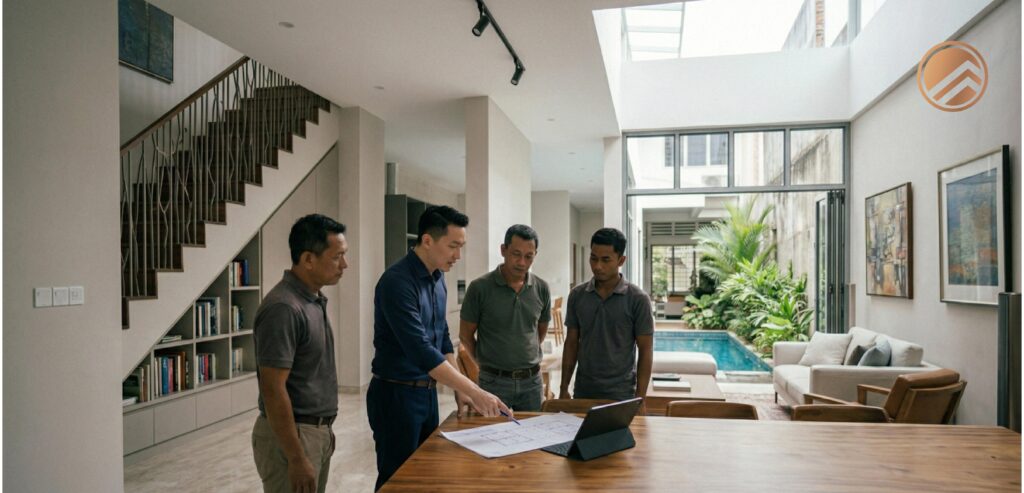
Properties that fall into this category within this price range are often older, sit on less optimal plots, or require substantial upgrading. What appears to be a good deal at first glance can quickly become more complex once the full cost of ownership is considered.
A semi-detached home purchased at $5.5M, for example, may require extensive renovation or rebuilding. When factoring in these additional costs, the total investment can move well beyond the initial purchase price.
This does not mean such opportunities should be avoided. In fact, for buyers who understand the implications and are prepared for the process, they can offer strong long-term positioning.
But the key is clarity.
Buying into this segment without fully accounting for the total cost can lead to decisions that feel stretched rather than strategic.
Condition vs Capital: A Misunderstood Trade-Off
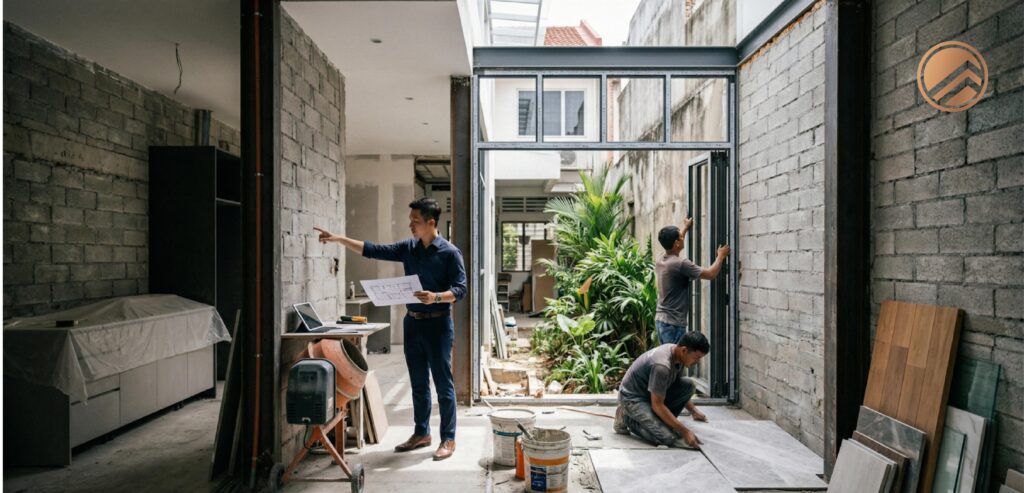
One of the most common patterns observed among buyers in this price range is the tendency to overvalue built condition.
A beautifully renovated home creates an immediate emotional response. It is easy to imagine moving in, settling down, and avoiding the stress of construction work. However, what is often overlooked is that renovation value depreciates over time.
The finishes, fittings, and design choices that feel premium today may not carry the same appeal five to ten years down the road.
In contrast, land value behaves very differently. It is far more stable and, in many cases, becomes the primary driver of long-term value.
This is why the decision between paying for condition and paying for land is not just about lifestyle, but also about flexibility.
A home anchored in land value gives you options. You can upgrade it, rebuild it, or reposition it based on your needs over time. A home priced heavily on its current condition may offer less room for such adjustments.
The right choice ultimately depends on your priorities, but it is important to recognise that this trade-off exists.
Why Micro-Location Makes a Bigger Difference Than Expected
At this price band, the difference between a good buy and a great one often comes down to factors that are not immediately obvious.
Micro-location plays a significant role in shaping both liveability and long-term value. Two homes within the same district and similar price range can perform very differently depending on their exact positioning.
Factors such as street accessibility, proximity to main roads, surrounding developments, and even the general feel of the immediate neighbourhood can influence both daily living and future resale potential.
This is where experience and on-the-ground understanding become critical. It is not just about identifying the right district, but about identifying the right part of that district.
For buyers who take the time to understand these nuances, the difference in outcome can be meaningful.
Liquidity: The Quiet Advantage of This Segment
One of the strongest advantages of the $4M to $6M range is its liquidity.
This is the segment with the widest buyer pool. It attracts upgraders, families, and long-term owner-occupiers, all of whom contribute to consistent transaction activity.
In practical terms, this means that properties within this range tend to be easier to enter and exit compared to higher-priced landed homes. There is more pricing clarity, more comparable transactions, and a clearer sense of where the market stands at any given time.
This does not eliminate risk, but it does provide a level of stability that is often overlooked.
Finding Clarity in a Decision-Heavy Segment
Ultimately, buying landed within the $4M to $6M range is less about finding the perfect home and more about making informed decisions.
Every option comes with trade-offs. A larger home may mean a less central location. A move-in ready property may come at the expense of long-term flexibility. A more exclusive property type may require additional capital beyond the purchase price.
The buyers who navigate this segment successfully are not the ones who avoid these trade-offs, but the ones who understand them clearly.
They know what they are prioritising, what they are giving up, and why the decision makes sense for their situation.
Final Thought
The $4M to $6M range is often seen as a comfortable entry point into landed living.
In reality, it is one of the most strategic segments in the market.
It offers access, liquidity, and opportunity — but only for buyers who approach it with clarity and intention.
Because in this price range, the outcome is rarely defined by the house you choose.
It is defined by the decisions you make along the way.
If you are currently exploring landed options within this range and want a clearer breakdown based on your needs and timeline, our sales consultants can walk you through what is realistically available on the ground today.